What have you folded lately?
Forum rules
READ: The Origami Forum Rules & Regulations
READ: The Origami Forum Rules & Regulations

my turn
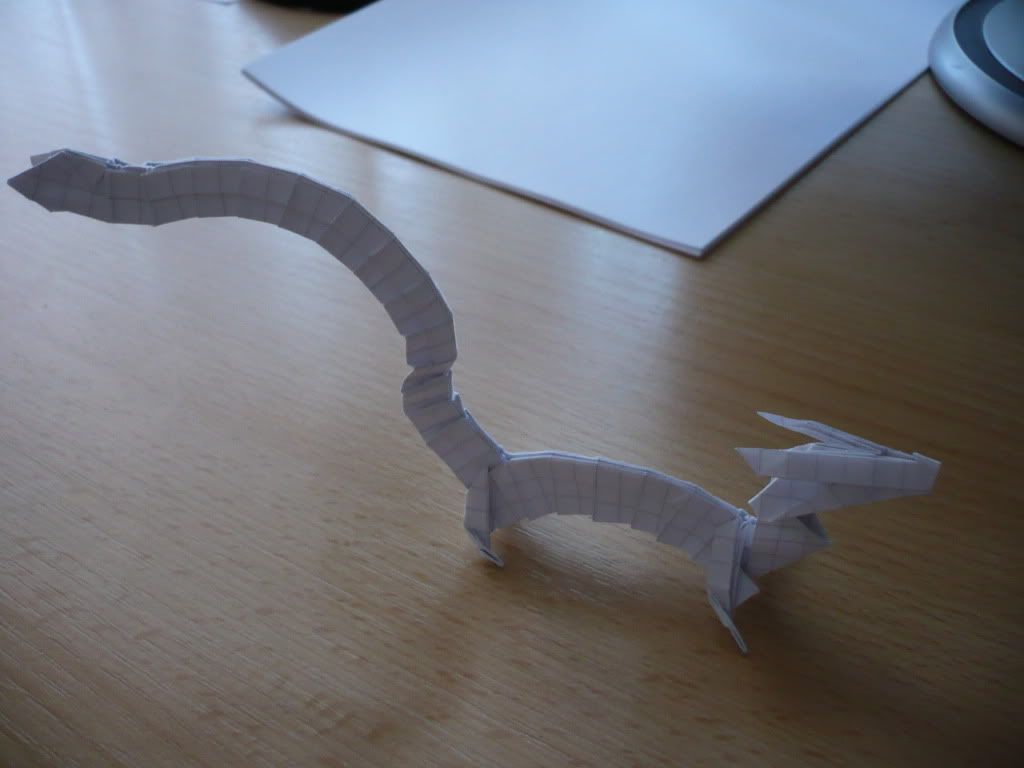
Eastern Dragon by Joseph Wu
http://i487.photobucket.com/albums/rr23 ... 080659.jpg
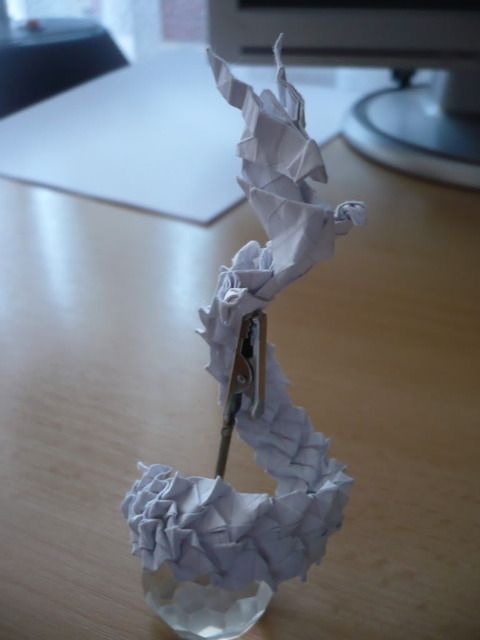
Chineese dragon made by me from the EDragon, it was an experiment
http://i487.photobucket.com/albums/rr23 ... 080657.jpg
Made them at school as you can see by the paper
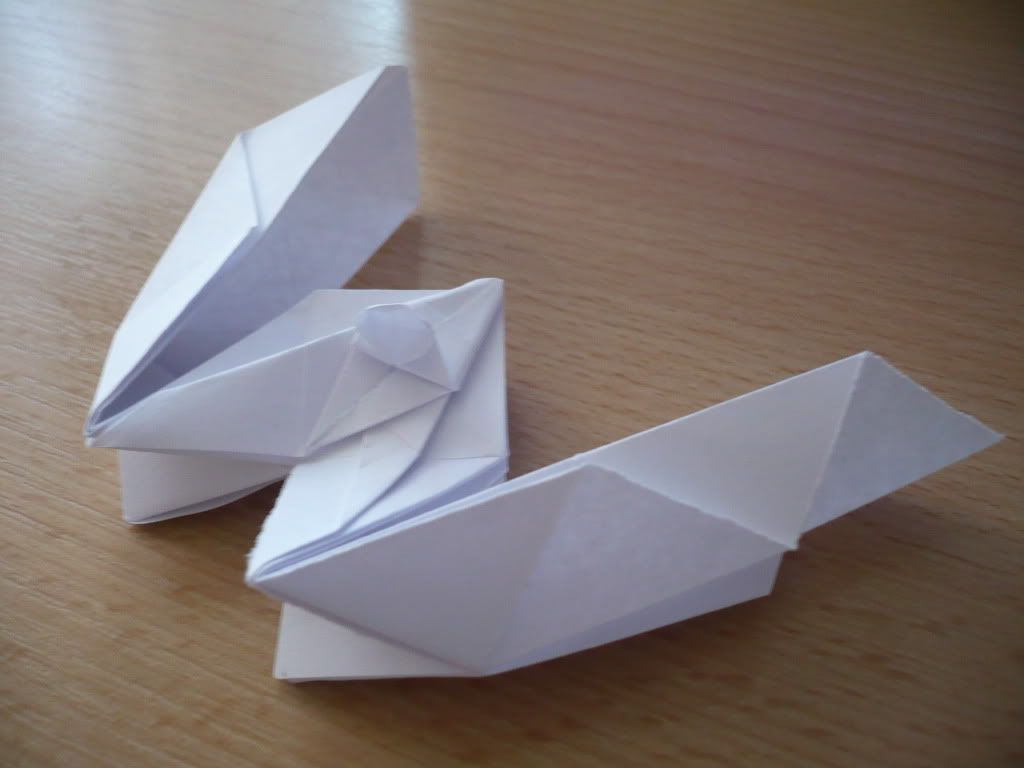
and Raven from Starcraft 2, by me (made it by accident)
http://i487.photobucket.com/albums/rr23 ... 080658.jpg
Eastern Dragon by Joseph Wu
http://i487.photobucket.com/albums/rr23 ... 080659.jpg
Chineese dragon made by me from the EDragon, it was an experiment
http://i487.photobucket.com/albums/rr23 ... 080657.jpg
Made them at school as you can see by the paper
and Raven from Starcraft 2, by me (made it by accident)
http://i487.photobucket.com/albums/rr23 ... 080658.jpg
Good paper+good hands=Origami=>the best art ever
-
joshuaorigami

- Buddha
- Posts: 2344
- Joined: April 26th, 2010, 6:35 pm
new oryx design. better colour changes and with a different base to the old oryx.

bear by jared needle. fantastic design and great diagrams!


bear by jared needle. fantastic design and great diagrams!

my diagrams page http://snkhan.co.uk/forum/viewtopic.php?t=7177
my flickr gallery http://www.flickr.com/photos/52731923@N04/
my flickr gallery http://www.flickr.com/photos/52731923@N04/

Re Joshua - If you look at the position of the ears and horns of antelopes/bovines/deer and other horned ungulates, you will see that the ears are behind the horns, not in front.
When designing such creatures, it is always tempting to graft a half-frog base onto your main base, and to use the two small flaps as ears. However, this puts them in front of the ears. I suspect this is what you have done in your recent models.
Have a go at coming up with a base that changes this arrangement. It is not as easy as it sounds. Have a look at some of the models by Lang or Trollip, and see how they have overcome this positioning, both in different ways.
Fishy
When designing such creatures, it is always tempting to graft a half-frog base onto your main base, and to use the two small flaps as ears. However, this puts them in front of the ears. I suspect this is what you have done in your recent models.
Have a go at coming up with a base that changes this arrangement. It is not as easy as it sounds. Have a look at some of the models by Lang or Trollip, and see how they have overcome this positioning, both in different ways.
Fishy
I once set up an origami PLC. But the business folded.
-
joshuaorigami
- Buddha
- Posts: 2344
- Joined: April 26th, 2010, 6:35 pm
o yes, i didnt realize this. i will try my best to improve in future.
thanks for telling me!
thanks for telling me!
my diagrams page http://snkhan.co.uk/forum/viewtopic.php?t=7177
my flickr gallery http://www.flickr.com/photos/52731923@N04/
my flickr gallery http://www.flickr.com/photos/52731923@N04/
-
FrumiousBandersnatch
- Forum Sensei
- Posts: 736
- Joined: October 10th, 2007, 11:52 pm
- Location: Atlanta, Georgia
- Contact:
You're doing much cleaner folds now, Joshua....Bravo!
My Flickr: http://www.flickr.com/photos/51033679@N07/
-
FrumiousBandersnatch
- Forum Sensei
- Posts: 736
- Joined: October 10th, 2007, 11:52 pm
- Location: Atlanta, Georgia
- Contact:
First fold through of Kamiya's Cicada Nymph...came out pretty decently...although the paper on the legs got a bit thick towards the end.
-Folded from 16 inch (40cm) sheet of 35gsm Sekishu Paper. (This paper comes from Awagami Factory in Japan...if you can find this stuff, it's pretty great once you treat it with methylcellulose)
-Paper tinted by me with a combination of different acrylic paints/methylcellulose.
-Diagrams in Origami USA Convention Book 2008
[img]http://fc09.deviantart.net/fs71/f/2010/ ... 5e90e8.jpg[/img]
-Folded from 16 inch (40cm) sheet of 35gsm Sekishu Paper. (This paper comes from Awagami Factory in Japan...if you can find this stuff, it's pretty great once you treat it with methylcellulose)
-Paper tinted by me with a combination of different acrylic paints/methylcellulose.
-Diagrams in Origami USA Convention Book 2008
[img]http://fc09.deviantart.net/fs71/f/2010/ ... 5e90e8.jpg[/img]
My Flickr: http://www.flickr.com/photos/51033679@N07/


-
Origamist388
- Super Member
- Posts: 154
- Joined: April 5th, 2010, 3:38 pm


-
joshuaorigami
- Buddha
- Posts: 2344
- Joined: April 26th, 2010, 6:35 pm
lucanus hembra by nicolas gajardo - 30x30cm tissue foil
and yes, that is a live centipede next to it!

ostrich by quentin trollip - 30x30cm tissue foil. It's not so hard, its just the fact that it gets so small compared to the starting square!

and yes, that is a live centipede next to it!

ostrich by quentin trollip - 30x30cm tissue foil. It's not so hard, its just the fact that it gets so small compared to the starting square!

my diagrams page http://snkhan.co.uk/forum/viewtopic.php?t=7177
my flickr gallery http://www.flickr.com/photos/52731923@N04/
my flickr gallery http://www.flickr.com/photos/52731923@N04/
-
Jonnycakes

- Buddha
- Posts: 1414
- Joined: June 14th, 2007, 8:25 pm
- Location: Ohio, USA
- Contact:


Hi Frumious !!FrumiousBandersnatch wrote:a combination of different acrylic paints/methylcellulose.
Congratulations for the wonderful cicada!
Could you please explain me and all the friends of the forum
the method of painting paper and the exact composition of the mixture?
(I hope the formula is not a secret as that of Coca_Cola)
All the best to you and yours from
Mario
P.S.: Do not flatter too much the little foldiarrheal pest, or will be necessary soon the "cut and cup" to him!
-
Razzmatazz

- Forum Sensei
- Posts: 892
- Joined: March 20th, 2009, 6:25 pm
- Location: Canada
-
FrumiousBandersnatch
- Forum Sensei
- Posts: 736
- Joined: October 10th, 2007, 11:52 pm
- Location: Atlanta, Georgia
- Contact:
Thank you JonnyCakes! The method I used was described to me by either Michael or Richard Alexander...(I can't recall which) a few years ago when I went to the old Origamido Studio. I imagine it's probably the same as they mention in the books!Great job on the cicada nymph, Frumious! Did you use the method described by Lafosse to paint the paper?
I posted a bit about this awhile ago...and after like twenty minutes of searching, here it is...I can elaborate if you necessary!Could you please explain me and all the friends of the forum
the method of painting paper and the exact composition of the mixture?
Note: This is what Michael Lafosse does to his Origamido paper, and what I was told to do when I asked them about it.
1: Take some methylcellulose and mix in a small amount of ACRYLIC paint. Just a very small amount will do: I would say perhaps a pea sized drop for every cup of methylcellulose, but there are no hard and fast rules. The more paint you add, the more saturated the final color will be.
2: Mix it in until it is a uniform shade, and then paint the mixture onto the paper the same way you would with Methylcellulose. (i.e., place the paper on a glass or plexiglass surface and paint the mixture on as you would if you were painting a wall, being careful to work the bubbles out gently) Once the paper is all painted, I generally use a rubber roller to take the excess paint off, as well as get the bubbles out, but this is not necessary.
3: Let dry, and then carefully peel up a corner and peel off of the glass.
Some things to consider when mixing the paint in: The color of the finished paper is going to be a bit less bright, and a bit more dull than the original paint/Methylcellulose mixture. Also, if you are going to mix colors together to make a different shade, or add black to make the color darker, the general rule for mixing paint is to start with the brighter color, and add very small bits of the darker color until it is the right shade. With paint, a small amount of dark color goes a long way, and once you put too much in, no amount of white paint added will fix it.
As for wet folding this when it is done, I have never had a problem with the paint running. If you have any specific questions, feel free to PM me!
My Flickr: http://www.flickr.com/photos/51033679@N07/